

अपनी एक साफ फोटो Upload करें, नीचे दिए गए Prompt को Copy करें और ChatGPT से अपनी Professional Torn-Paper Collage Photo बनाएं।
📸 इस Prompt को कैसे इस्तेमाल करें?
सबसे पहले अपनी एक साफ और अच्छी क्वालिटी वाली फोटो ChatGPT में Upload करें। ध्यान रखें कि आपका असली चेहरा साफ दिखाई दे, ताकि AI आपके चेहरे को सही तरीके से पहचान सके।
अगर आपके पास कोई Reference Photo है, तो उसे भी Upload करें। इसके बाद नीचे दिए गए “Copy Prompt” बटन पर क्लिक करें। इससे पूरा Prompt एक ही क्लिक में Copy हो जाएगा। फिर उसे ChatGPT में Paste करके Photo Generate करने के लिए कहें।
AI आपकी फोटो से आपका असली चेहरा और पहचान लेगा और Reference Photo से केवल Style और Collage का Idea समझेगा। इसके बाद आपकी Realistic, Cinematic और Premium Three-Photo Collage तैयार होगी।
बेहतर Result के लिए: साफ, सामने से ली गई और अच्छी रोशनी वाली Original Photo इस्तेमाल करें। Face पर ज्यादा Filter या Blur वाली फोटो इस्तेमाल न करें।
🔥 MASTER IMAGE GENERATION PROMPT
Create a highly photorealistic vertical portrait using TWO separate image inputs with strictly separated roles:
REFERENCE IMAGE = VISUAL BLUEPRINT ONLY.
USER PHOTO = SOLE IDENTITY SOURCE.
Recreate the reference photograph as closely as practical in its visual construction, while replacing the reference person completely with the person from the user’s uploaded photograph.
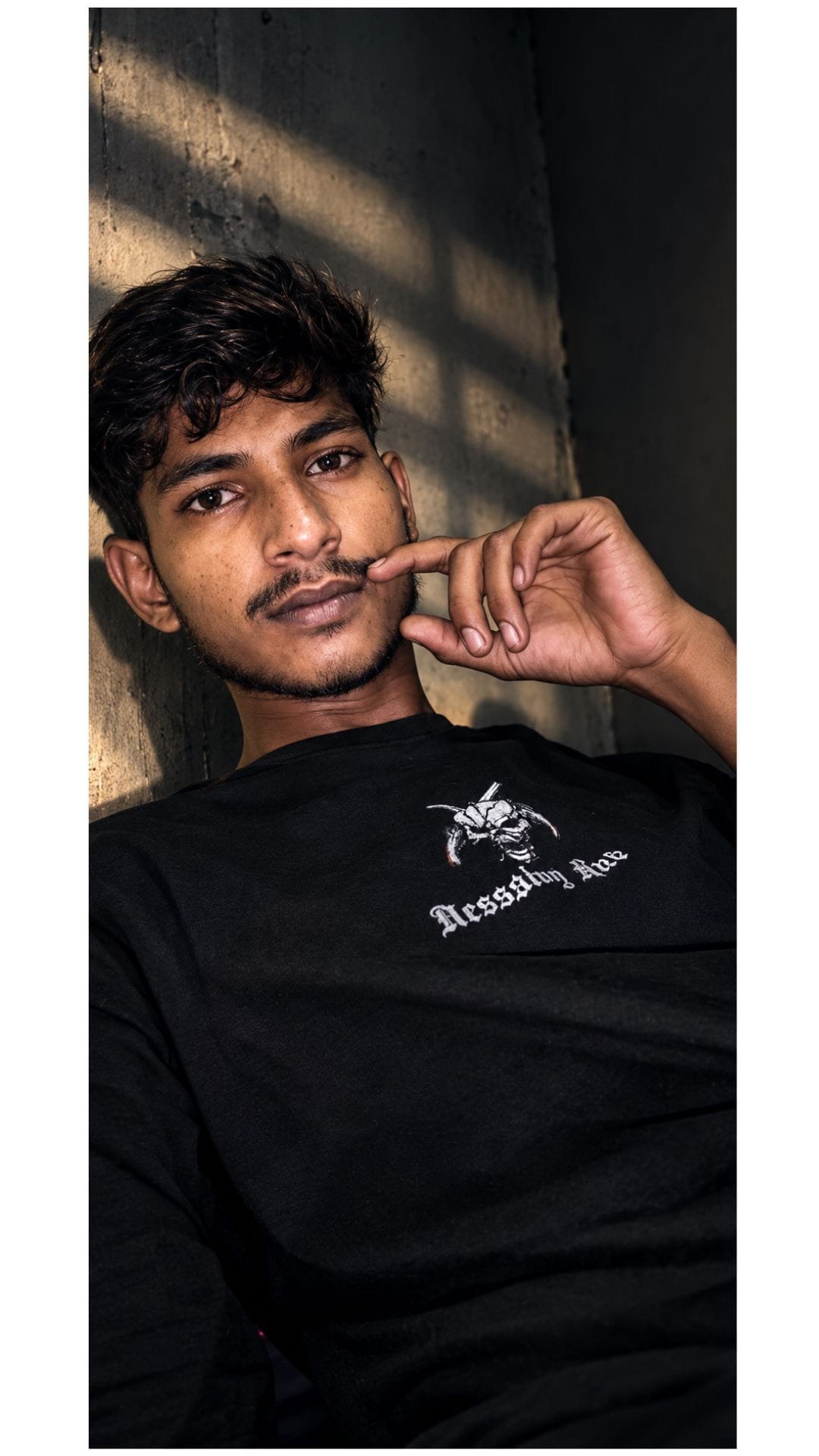
Create a vertical, close-to-medium portrait of the user reclining or leaning back against a rough, unfinished concrete wall. The composition should feel like an authentic spontaneous fashion/lifestyle photograph captured from a relatively close camera position, with the subject occupying most of the frame.
Match the reference composition: the user’s head positioned toward the upper-left/central area, body extending diagonally downward through the frame, with substantial black clothing filling the lower portion. Preserve the slightly low/close perspective and the natural perspective distortion associated with photographing a reclining subject from nearby.
Recreate the relaxed, confident pose: the subject leans back against the wall, shoulders and torso reclined, head slightly angled toward the camera, eyes directed naturally toward the lens. One hand is raised beside the face, with the fingers positioned naturally around the moustache/upper-lip area in the same casual gesture as the reference. Preserve realistic hand anatomy, finger placement, wrist orientation, and believable contact between finger and face.

Recreate the reference’s clothing concept: a loose solid black T-shirt with a small light-colored graphic/emblem and stylized lettering on the chest area. Preserve the dark, understated streetwear aesthetic, natural fabric folds, thickness, texture, and realistic draping across the reclining torso. Do not transfer any identity from the reference person.
Recreate the reference hairstyle concept: naturally textured, slightly tousled dark hair with visible individual strands and organic volume. Adapt the hairstyle naturally to the user’s own hairline, hair density, and characteristics rather than forcing an incompatible hairstyle.
The environment should remain a dark, unfinished concrete interior/wall setting, with visibly rough vertical concrete texture, subtle imperfections, stains and tonal variation. Preserve the strong relationship between the subject and the wall, including the darker area toward the right side of the frame.
Reproduce the distinctive lighting: a dramatic warm directional beam enters from the upper-left/left side and creates a broad diagonal illuminated region across the rough wall, while much of the surrounding environment falls into deep shadow. The subject’s face receives warm directional illumination with controlled highlights and dimensional shadows. Maintain realistic falloff across the face, hair, hand, shirt and wall. The lighting should feel like genuine natural/environmental light entering through an opening, not an artificial studio spotlight.

Preserve the reference’s warm, moody, high-contrast photographic treatment: deep blacks, warm skin illumination, subdued background tones, restrained saturation, strong tonal separation and cinematic shadow depth. Keep skin realistic and detailed, including natural pores and subtle texture. Apply only professional photographic finishing—no plastic smoothing or exaggerated beauty retouching.
Use shallow-to-moderate depth of field appropriate to a close portrait. Keep the user’s face and eyes as the primary focus, with nearby hand and clothing remaining convincingly detailed while the deeper background gradually loses definition. Preserve realistic perspective, natural anatomy, authentic fabric rendering, physically believable shadows and photographic depth.
The finished image should look as though the user themselves was genuinely photographed in this exact visual setup, rather than having their face pasted onto the reference photograph. Maintain natural integration between the user’s identity, expression, skin, hair, hand, clothing, lighting and environment.
Do not copy the reference person’s identity, face or facial characteristics. Transfer only the visual arrangement, pose, expression, styling concept, environment, lighting, camera perspective and photographic treatment.
🔒 ABSOLUTE USER IDENTITY LOCK
Use the USER PHOTO as the sole and exclusive identity source.
Preserve the user’s recognizable identity exactly and naturally, including their visible:
- face shape and proportions
- eyes and eye shape
- eyebrows
- nose
- lips
- cheeks
- jawline
- chin
- forehead
- ears
- skin tone
- natural skin texture
- beard/moustache
- hairline
- natural age
- distinctive facial characteristics
Do not copy, borrow, blend or reconstruct the reference person’s facial identity.
Do not reshape the user’s face to resemble the reference. Do not replace facial features. Do not apply excessive beautification or artificial symmetry. Do not make the user look like the reference person.
Lighting, shadows and perspective may alter how the user’s face is photographed, but the underlying identity must remain unmistakably the user’s own.
🎭 EXPRESSION & POSE LOCK
Preserve the reference’s relaxed, confident photographic attitude.
The user’s body should recline/lean backward against the wall with a similar torso angle and overall body positioning.
Keep the head orientation, gaze toward the camera, relaxed facial expression and casual hand-to-face gesture visually consistent with the reference.
The raised hand should naturally approach the moustache/upper-lip region without deforming the face or fingers.
Transfer expression and pose only, never identity.
The user’s own facial structure must perform the expression naturally.
📸 CAMERA & COMPOSITION LOCK
Preserve the reference’s vertical portrait composition and close shooting perspective.
- Vertical full-frame composition.
- Close camera-to-subject distance.
- Slightly low/nearby viewpoint consistent with the reclining pose.
- Head positioned predominantly in the upper portion of the frame.
- Torso expanding toward the lower frame.
- Subject occupying most of the image.
- Preserve the diagonal visual flow created by the reclining body.
- Maintain the relative scale of head, hand and torso.
- Preserve the substantial dark negative/background areas around the subject.
- Keep the rough wall visibly present behind the subject.
- Face and eyes remain the principal focal point.
- Natural perspective rather than an exaggerated wide-angle distortion.
- Realistic depth and background separation.
Do not arbitrarily change the crop, camera height, perspective, subject scale or overall framing.
🎨 LIGHTING & EDITING LOCK
Reconstruct the reference lighting with a warm directional beam from the upper-left/left, creating a broad diagonal illuminated pattern across the concrete wall.
Maintain:
- warm highlights
- deep environmental shadows
- controlled facial contrast
- dimensional cheek/jaw shadows
- realistic hand illumination
- subtle hair highlights
- strong black clothing density
- gradual light falloff
- natural ambient darkness
- believable shadow behavior
Color grade toward a warm, dark, cinematic photographic aesthetic with restrained saturation, rich blacks, slightly warm skin highlights and muted concrete tones.
Preserve realistic skin texture and fine facial detail. Apply subtle clarity and professional sharpening without creating harsh artificial edges. Retain realistic fabric texture, individual hair strands and natural wall detail.
Use authentic photographic depth, natural highlight roll-off and restrained contrast. Avoid an HDR-heavy or CGI appearance.
🚫 NEGATIVE PROMPT
Do not copy reference-person identity, reference face, reference facial proportions, reference facial features, identity mixing, face morphing, face swapping appearance, identity replacement, facial redesign, altered user’s facial structure, different person, unrecognizable user, excessive beautification, artificial symmetry, plastic skin, waxy skin, over-smoothed skin, fake pores, distorted eyes, malformed nose, distorted mouth, altered jawline, altered chin, unnatural beard, unnatural hairline, unrealistic hair, malformed hands, extra fingers, missing fingers, fused fingers, broken fingers, distorted wrist, unnatural hand-to-face contact, anatomy errors, unnatural body proportions, random pose change, random expression change, random clothing change, random hairstyle change, unnecessary background replacement, unnecessary camera change, excessive wide-angle distortion, flat lighting, artificial studio lighting, oversaturated colors, crushed facial detail, excessive HDR, excessive sharpening, excessive blur, fake bokeh, CGI, 3D render, illustration, cartoon, painting, artificial skin, videogame appearance, obvious AI artifacts, face pasted onto body, inconsistent lighting, mismatched skin and environment, unnatural shadows, unrealistic fabric, duplicated body parts, low detail, low resolution, compression artifacts.
📖 HOW TO USE
REFERENCE IMAGE = visual blueprint
Use it to reproduce the visual language: composition, pose, expression, clothing concept, hairstyle concept, camera perspective, framing, concrete environment, lighting, shadows, color grading and photographic editing.
USER PHOTO = identity blueprint
Upload your own clear photograph and use it as the sole identity source. Your face, recognizable facial characteristics, natural skin tone, facial proportions, hairline and other identity-defining features must remain yours.
Core rule:
REFERENCE IMAGE → HOW the final photograph should look.
USER PHOTO → WHO the person is.
The final result should look like you were genuinely photographed in the reference’s visual world, not like a face swap or imitation of the reference person.
