
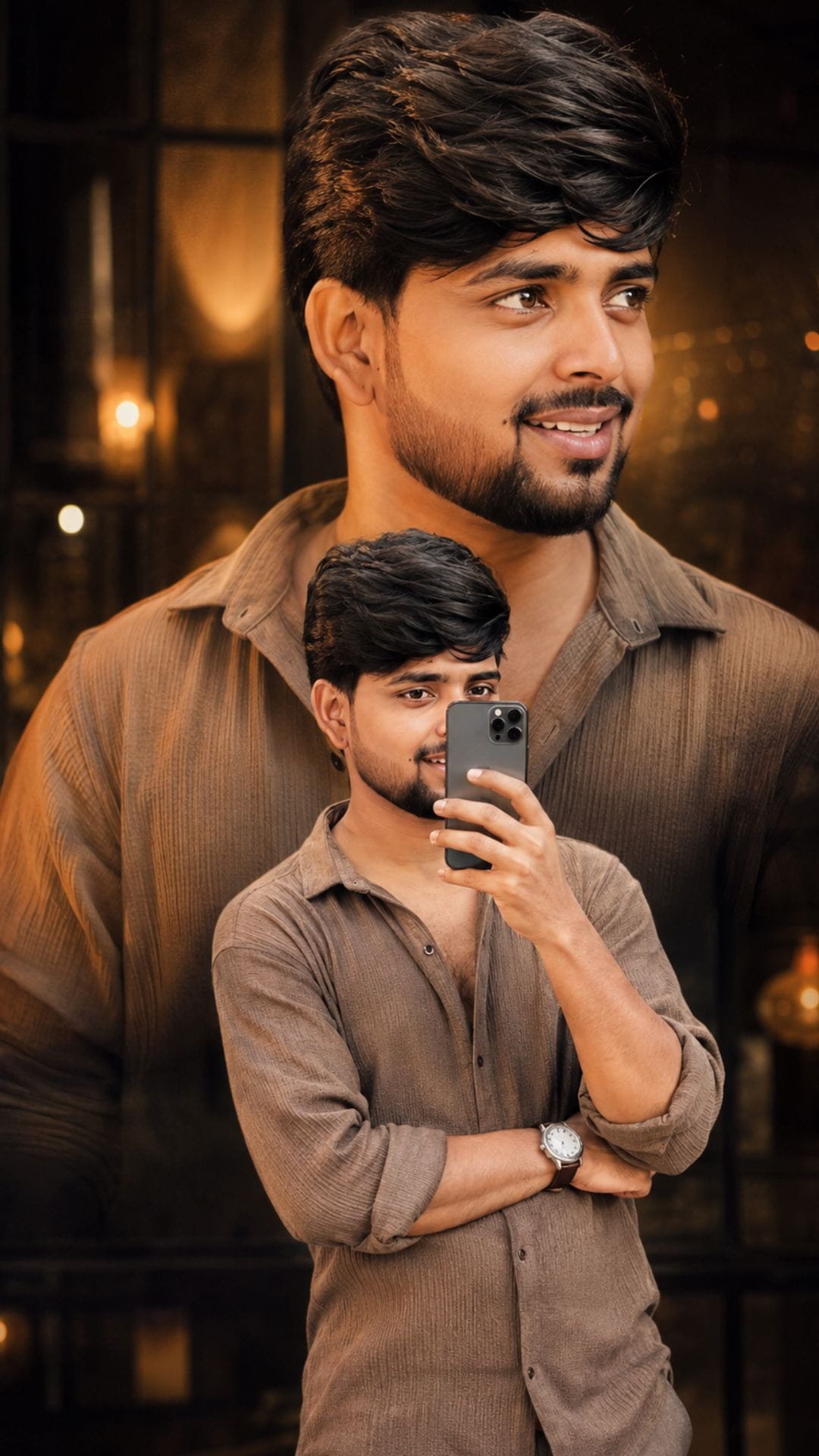

अपनी एक साफ फोटो Upload करें, नीचे दिए गए Prompt को Copy करें और ChatGPT से अपनी Professional Torn-Paper Collage Photo बनाएं।
📸 इस Prompt को कैसे इस्तेमाल करें?
सबसे पहले अपनी एक साफ और अच्छी क्वालिटी वाली फोटो ChatGPT में Upload करें। ध्यान रखें कि आपका असली चेहरा साफ दिखाई दे, ताकि AI आपके चेहरे को सही तरीके से पहचान सके।
अगर आपके पास कोई Reference Photo है, तो उसे भी Upload करें। इसके बाद नीचे दिए गए “Copy Prompt” बटन पर क्लिक करें। इससे पूरा Prompt एक ही क्लिक में Copy हो जाएगा। फिर उसे ChatGPT में Paste करके Photo Generate करने के लिए कहें।
AI आपकी फोटो से आपका असली चेहरा और पहचान लेगा और Reference Photo से केवल Style और Collage का Idea समझेगा। इसके बाद आपकी Realistic, Cinematic और Premium Three-Photo Collage तैयार होगी।
बेहतर Result के लिए: साफ, सामने से ली गई और अच्छी रोशनी वाली Original Photo इस्तेमाल करें। Face पर ज्यादा Filter या Blur वाली फोटो इस्तेमाल न करें।
🔥 MASTER IMAGE GENERATION PROMPT
Create a highly photorealistic, cinematic vertical lifestyle portrait using TWO separate image inputs with strictly separated roles:
REFERENCE IMAGE = VISUAL BLUEPRINT ONLY.
Use the reference image only to reconstruct the visual design of the main artwork: the dramatic oversized portrait composition, smaller foreground person, pose, head orientation, gaze direction, expression, hairstyle concept, sunglasses, clothing concept, accessories, environment, camera perspective, framing, depth, lighting, color palette, atmospheric bokeh, and cinematic finishing.
USER PHOTO = SOLE IDENTITY SOURCE.
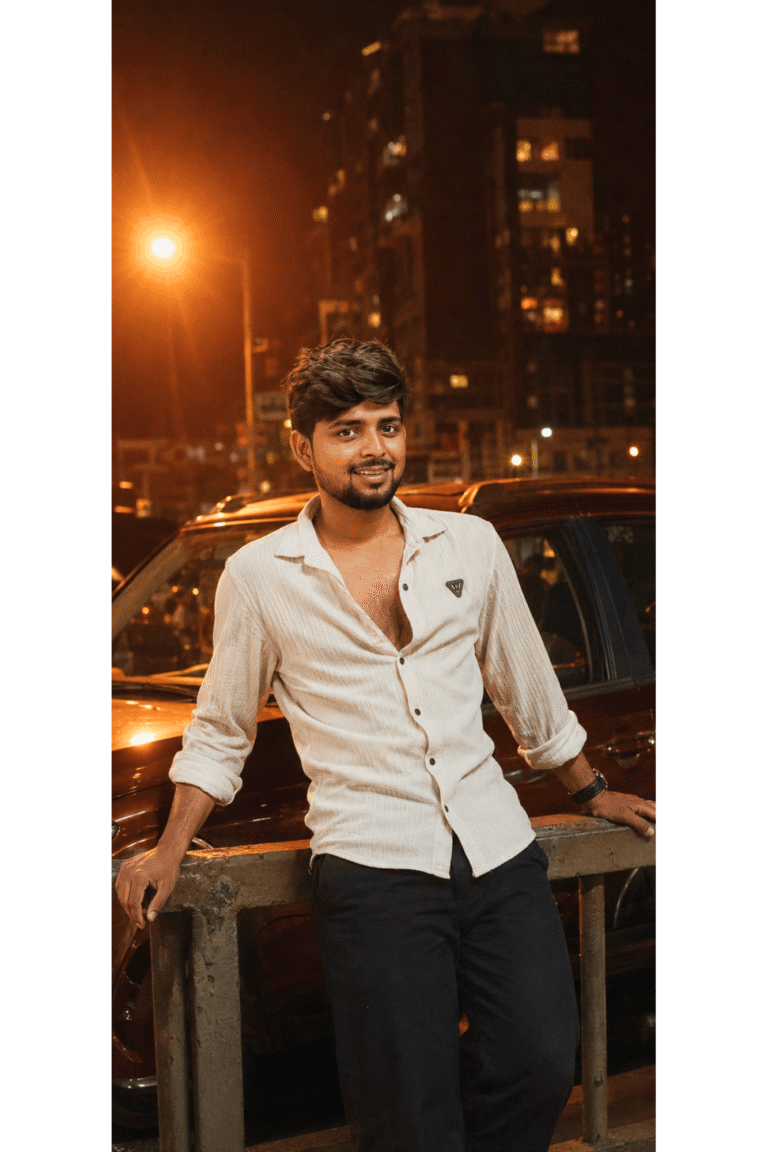
Use the user’s uploaded photograph exclusively to determine who the foreground person is. Preserve the user’s recognizable identity exactly and naturally.
Recreate the reference’s distinctive double-scale cinematic portrait composition. Build the image as a polished editorial-style photograph where a large, softly integrated close-up portrait of the user occupies the upper/background portion, while a smaller full/three-quarter-body version of the same user stands in the foreground, creating a layered portrait effect. The large background portrait should dominate the frame without looking like a separate pasted image; it should feel naturally integrated into the same photographic environment.
Main large portrait
Place the enlarged portrait behind and above the foreground subject, with the head filling much of the upper-middle frame. Reproduce the reference’s approximate three-quarter/side-facing head orientation, looking slightly upward and toward the side rather than directly into the camera. Give the user a calm, confident, serious expression. If sunglasses are visible in the reference, reproduce the style and placement concept of those sunglasses while keeping the user’s own facial structure completely unchanged.

Maintain natural facial proportions and realistic facial texture. The large portrait should have convincing photographic detail but blend softly into the environment around its edges.
Foreground subject
Place a smaller version of the same user in front of the enlarged portrait, approximately centered and occupying the lower-middle portion of the composition. Recreate the reference’s standing posture: torso slightly angled, one hand raised naturally toward the face while holding a smartphone, with the other arm bent across the lower torso. Maintain a relaxed, confident fashion-portrait stance.
Reproduce the reference’s clothing concept: a fitted, understated long-sleeve casual top in a muted earthy/taupe-brown tone, with natural fabric folds and realistic material texture. Preserve the reference’s wrist-accessory styling where visible, including the watch/bracelet concept, without allowing accessories to obscure the user’s identity.
The smartphone should be held naturally in front of the face at approximately the same position as the reference, partially obscuring the lower facial area of the foreground figure. Keep hands anatomically correct with realistic fingers and grip.
Environment
Create the same general visual atmosphere as the reference: an indoor urban/editorial environment with dark warm surroundings, soft structural lines and indistinct background elements. Keep the environment intentionally defocused. Use subtle warm practical-light bokeh and atmospheric depth behind the subject.
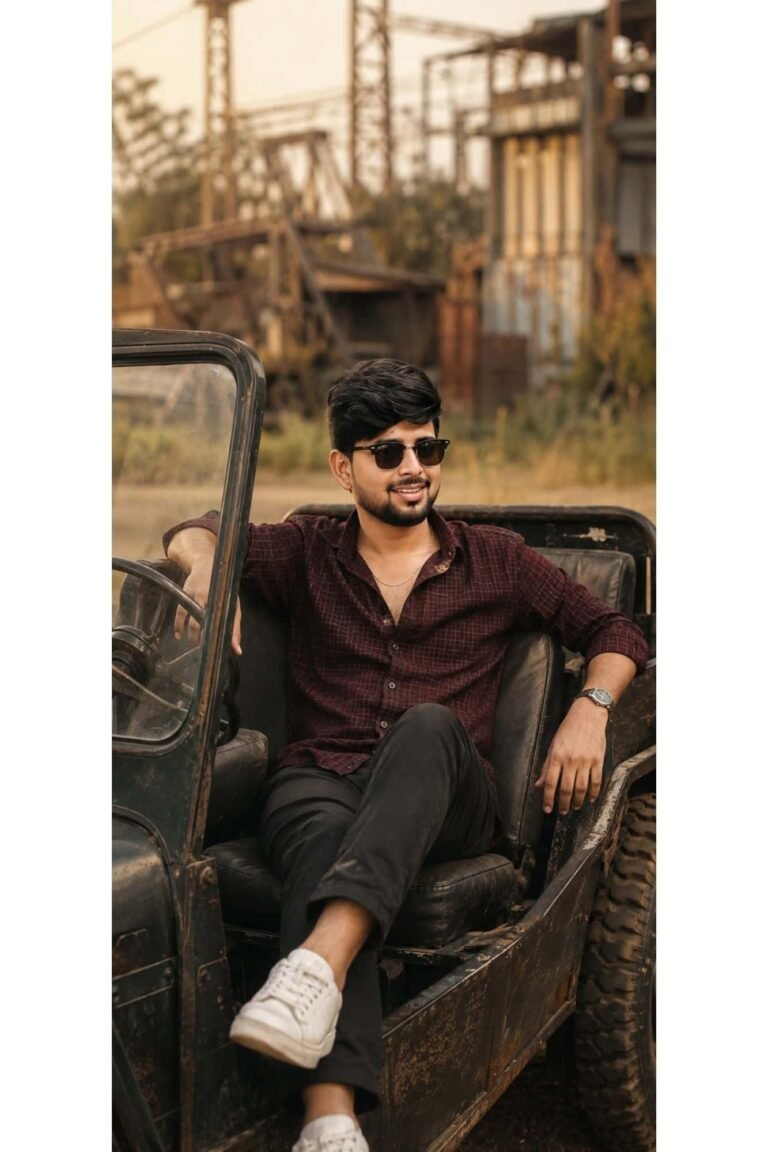
The foreground and enlarged portrait must appear to exist within one coherent visual world, with consistent lighting direction, color, perspective, and atmosphere.
Composition
Use a vertical portrait composition, closely matching the reference’s visual hierarchy. The oversized portrait occupies the upper/background region; the smaller standing subject overlaps it from the lower center. Preserve the strong layered silhouette relationship between the two scales.
Keep the foreground subject clearly readable while allowing the giant portrait to remain the dominant visual element. Maintain balanced negative space and avoid adding unrelated objects.
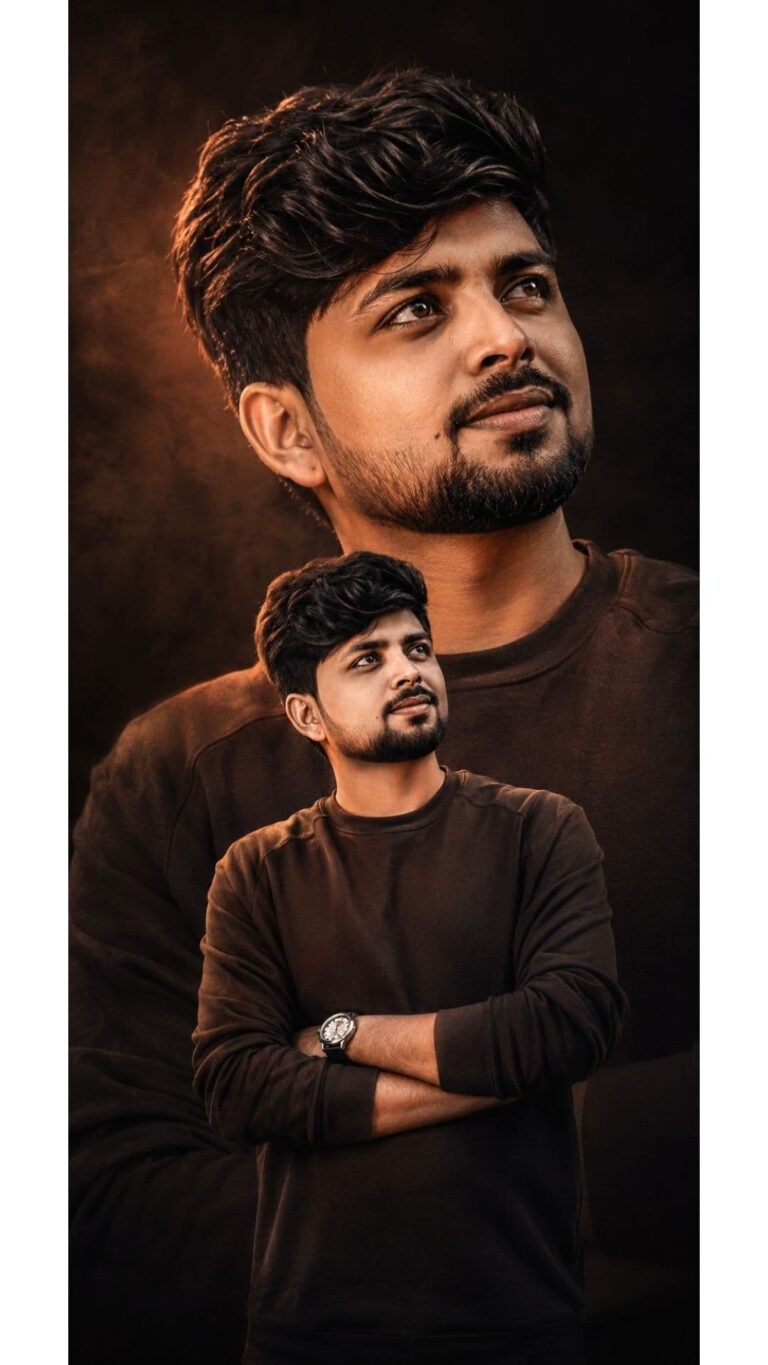
The final result should look like an intentionally photographed cinematic editorial portrait—not a crude collage, face swap, cutout, or pasted overlay.
Photographic realism
Use realistic skin pores, natural facial texture, individual hair strands, authentic fabric fibers and folds, physically believable shadows, realistic reflections on sunglasses and smartphone surfaces, natural anatomy, realistic hands, and convincing depth separation.
The final image should resemble a professionally photographed cinematic fashion/editorial portrait with subtle high-end retouching while retaining authentic photographic imperfections.
🔒 ABSOLUTE USER IDENTITY LOCK
The USER PHOTO is the ONLY identity source.
Preserve the user’s actual:
- face shape
- facial proportions
- eyes and eye shape
- eyebrows
- nose
- lips
- cheeks
- jawline
- chin
- forehead
- ears
- skin tone
- natural skin texture
- beard/moustache, if present
- hairline
- natural apparent age
- distinctive facial characteristics
Do not copy, reproduce, imitate, or transfer the reference person’s identity.
Do not blend the reference identity with the user’s identity.
Do not morph faces.
Do not replace the user’s facial structure.
Do not redesign the user’s face.
Do not beautify the user into a different person.
Do not alter recognizable facial characteristics merely to match the reference.
The same user’s identity must be maintained in both the large background portrait and the smaller foreground figure.
Any sunglasses, expression, lighting, perspective, hairstyle styling, or photographic treatment must be applied around the user’s existing identity, never by changing that identity.
🎭 EXPRESSION & POSE LOCK
Transfer the visual behavior of the reference, not its identity.
Large portrait:
- three-quarter/side-facing head orientation
- slightly elevated chin/head angle
- gaze directed toward the side/upward
- calm, serious, confident expression
- natural facial tension and relaxed mouth
Foreground figure:
- upright relaxed standing posture
- torso naturally angled
- one arm raised toward the face while holding a smartphone
- opposite arm bent naturally across the torso
- confident but casual body language
- natural shoulder, elbow and wrist positioning
Keep the user’s own facial structure unchanged while allowing their face to naturally perform the reference expression.
Do not force an unnatural smile, jaw position, eye shape, or head deformation.
📸 CAMERA & COMPOSITION LOCK
Reconstruct the reference’s visual camera language, rather than blindly imposing arbitrary camera specifications.
Use a vertical editorial portrait perspective with:
- close-to-medium photographic perspective for the oversized portrait
- slightly wider perspective for the foreground body
- natural-looking perspective without exaggerated wide-angle distortion
- enlarged background portrait occupying the upper and central background
- smaller foreground subject overlapping the lower-middle area
- strong scale contrast between both versions
- shallow-to-moderate depth of field
- crisp facial detail on the primary visual areas
- softly blurred environmental background
- natural background compression
- controlled subject separation
- realistic photographic perspective
Preserve the reference’s approximate framing, subject scale, overlap, negative space, and visual hierarchy.
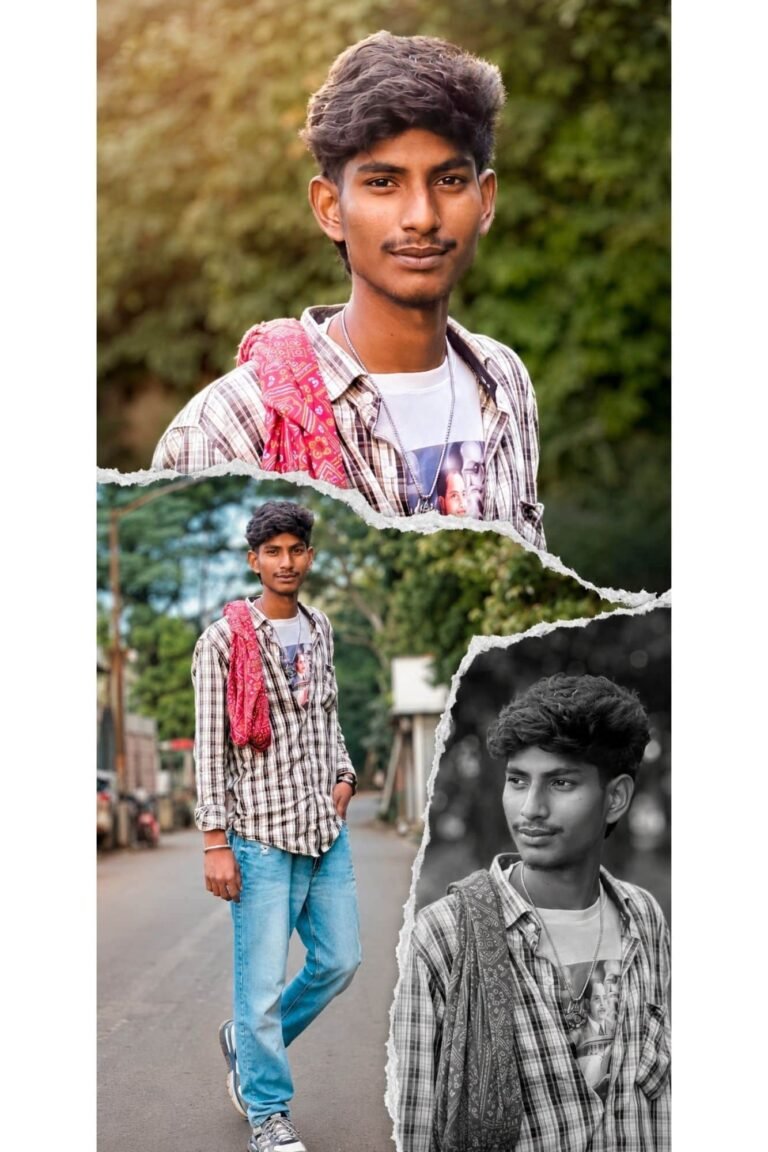
The oversized portrait must feel integrated into the scene, with subtle atmospheric blending rather than looking like a transparent digital overlay.
🎨 LIGHTING & EDITING LOCK
Reconstruct the reference’s warm, cinematic photographic treatment.
Use soft, warm ambient illumination with gentle directional highlights across the face and hair. Maintain subtle shadow depth around the facial contours and clothing while avoiding harsh artificial contrast.
Create:
- warm amber/brown overall color palette
- slightly subdued saturation
- warm highlights
- controlled deep shadows
- soft atmospheric glow
- gentle practical-light bokeh
- realistic reflections
- cinematic tonal separation
- subtle background haze
- refined clarity without oversharpening
- natural skin rendering
- restrained HDR-like tonal detail
- professional cinematic color grading
Hair should retain individual strand detail and natural volume. Skin should retain realistic pores and texture. Fabric should retain believable folds and material variation.
The final treatment must remain photographic and physically believable, never glossy CGI.
🚫 NEGATIVE PROMPT
reference person’s identity, reference face, reference facial proportions, reference facial features, identity transfer, identity replacement, face swap, face morphing, blended identities, mixed face, redesigned face, altered user identity, changed facial structure, different person, unrecognizable user, excessive beautification, artificial symmetry, plastic skin, waxy skin, porcelain skin, over-smoothed skin, distorted eyes, altered nose, altered lips, altered jawline, altered cheeks, malformed ears, unnatural beard, incorrect hairline, de-aging, aging, anatomy errors, malformed hands, extra fingers, missing fingers, fused fingers, distorted smartphone, broken accessories, random pose, changed head direction, incorrect gaze, random clothing, different clothing color, random hairstyle, unnecessary background changes, unnecessary objects, incorrect composition, incorrect scale relationship, flat lighting, harsh artificial lighting, excessive glow, excessive HDR, oversaturation, crushed shadows, blown highlights, excessive sharpening, fake bokeh, unrealistic reflections, cutout appearance, pasted portrait, obvious collage, transparent overlay, CGI, 3D render, cartoon, illustration, painting, artificial skin texture, AI artifacts, uncanny face, unrealistic anatomy, low detail, low resolution, motion distortion.
📖 HOW TO USE
REFERENCE IMAGE = VISUAL BLUEPRINT
Use it for:
- overall visual style
- oversized + foreground portrait composition
- pose
- head orientation
- gaze
- expression
- clothing concept
- hairstyle concept
- sunglasses/accessory styling
- camera perspective
- framing
- environment
- background
- lighting
- depth of field
- color palette
- cinematic editing
USER PHOTO = IDENTITY BLUEPRINT
Upload your own clear photograph and use it as the sole source of identity.
Your photograph determines who the person is. The reference determines how the final photograph should look.
The final result should therefore feel like the user genuinely photographed inside the reference’s visual world, preserving the user’s recognizable identity while recreating the reference’s composition, pose, styling, atmosphere, lighting, and photographic language.
Most important rule: PRESERVE WHO THE USER IS. RECREATE HOW THE REFERENCE LOOKS.
