
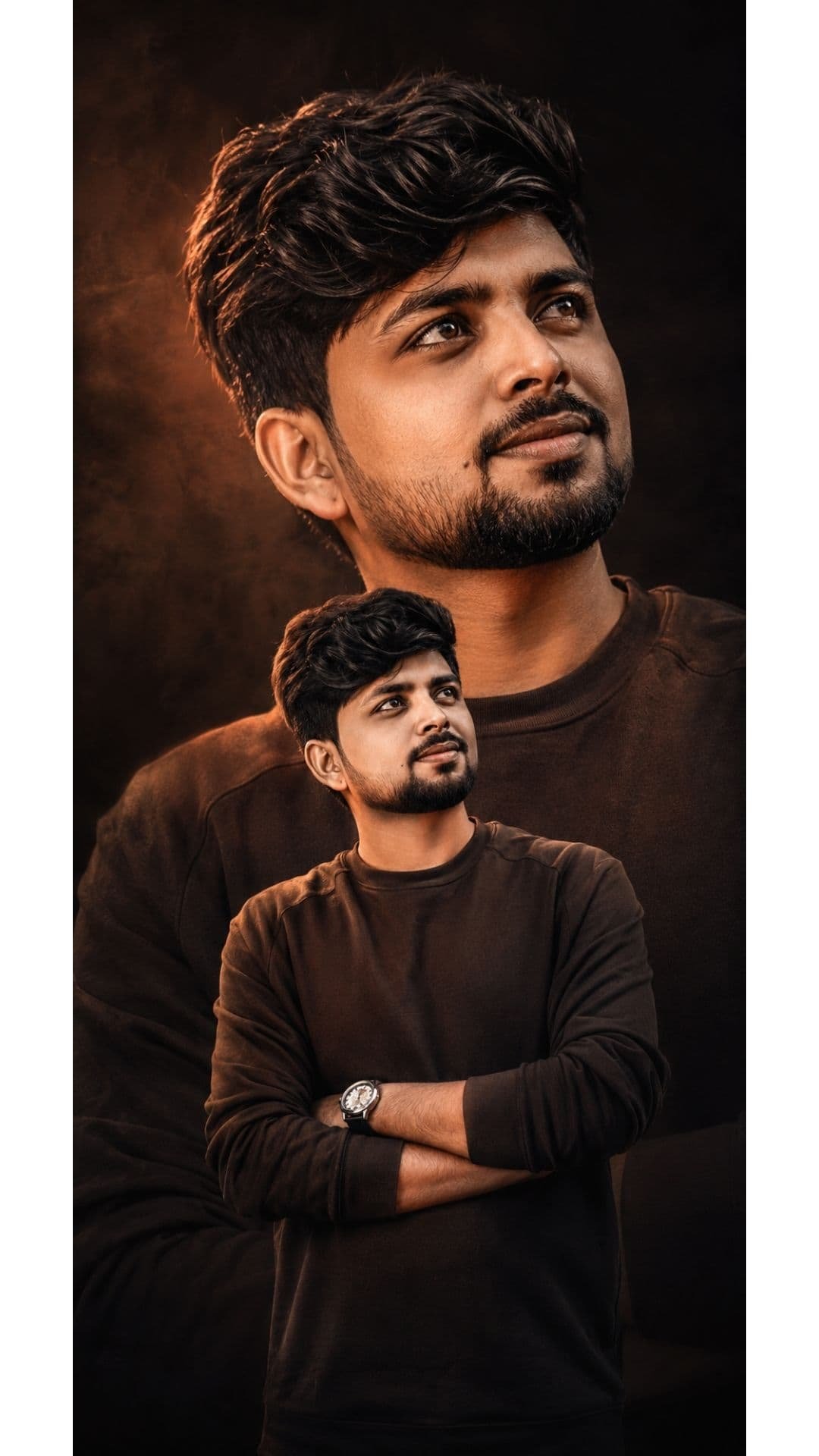

अपनी एक साफ फोटो Upload करें, नीचे दिए गए Prompt को Copy करें और ChatGPT से अपनी Professional Torn-Paper Collage Photo बनाएं।
📸 इस Prompt को कैसे इस्तेमाल करें?
सबसे पहले अपनी एक साफ और अच्छी क्वालिटी वाली फोटो ChatGPT में Upload करें। ध्यान रखें कि आपका असली चेहरा साफ दिखाई दे, ताकि AI आपके चेहरे को सही तरीके से पहचान सके।
अगर आपके पास कोई Reference Photo है, तो उसे भी Upload करें। इसके बाद नीचे दिए गए “Copy Prompt” बटन पर क्लिक करें। इससे पूरा Prompt एक ही क्लिक में Copy हो जाएगा। फिर उसे ChatGPT में Paste करके Photo Generate करने के लिए कहें।
AI आपकी फोटो से आपका असली चेहरा और पहचान लेगा और Reference Photo से केवल Style और Collage का Idea समझेगा। इसके बाद आपकी Realistic, Cinematic और Premium Three-Photo Collage तैयार होगी।
बेहतर Result के लिए: साफ, सामने से ली गई और अच्छी रोशनी वाली Original Photo इस्तेमाल करें। Face पर ज्यादा Filter या Blur वाली फोटो इस्तेमाल न करें।
🔥 MASTER IMAGE GENERATION PROMPT
Create a highly photorealistic, cinematic vertical portrait using TWO separate image inputs with strictly separated roles:
REFERENCE IMAGE = VISUAL BLUEPRINT ONLY.
Use the reference image only to reconstruct the visual design, photographic construction, composition, pose, styling, environment, lighting, perspective, color treatment, and distinctive large-background-portrait + smaller-foreground-portrait double-scale composition.
USER PHOTO = SOLE IDENTITY SOURCE.
Use the user’s uploaded photograph as the only source of the person’s identity and recognizable facial characteristics. The final person must remain unmistakably the user.
Ignore all Instagram interface elements visible around the artwork in the reference screenshot, including status bar, icons, engagement buttons, captions, thumbnails, borders, and other app UI. Recreate only the actual photographic artwork.
Construct a dramatic vertical cinematic double-portrait composition. The main visual is a large, oversized close-up portrait of the user occupying most of the background. The large portrait should feel like a powerful enlarged photographic presence behind the subject, with the head extending toward the upper portion of the frame and the face appearing substantially larger than life. Frame the large portrait closely so portions of the head and shoulders naturally approach or extend beyond the image boundaries.
In front of this oversized portrait, place a smaller full upper-body version of the same user, centered in the lower-middle portion of the composition. The smaller subject should appear physically integrated into the scene rather than pasted on top. Maintain natural scale relationships, realistic overlap, atmospheric depth, and believable lighting.
The foreground subject should have a confident, serious, contemplative expression, with the head slightly raised and turned subtly upward, following the visual direction of the reference. The oversized background portrait should communicate the same overall attitude and directional head orientation while remaining the user’s own identity.
Recreate the reference’s clothing concept: a simple fitted, dark warm-brown/earth-tone crew-neck shirt or sweatshirt with subtle fabric texture and natural folds. Keep the garment understated and cinematic rather than fashionable or overly stylized. Recreate the short, naturally textured, slightly curly/wavy hairstyle concept visible in the reference, but adapt it naturally to the user’s own hair where applicable.

The environment should remain dark, atmospheric and minimally defined, resembling a shadowy cinematic interior or indistinct dark background with subtle smoky/soft atmospheric texture. Keep the background secondary to the portraits. Avoid introducing unrelated scenery or objects.
The visual hierarchy must be:
- oversized background portrait as the dominant visual element,
- smaller foreground portrait as the secondary focal point,
- dark atmospheric environment supporting both,
- no distracting graphic elements.
Make the two portrait scales feel intentionally designed as a cinematic layered photographic composition, not as an obvious face swap, collage, sticker, or duplicated cutout.
Preserve realistic anatomy and proportions in both representations. The foreground person’s shoulders, neck, arms and torso should connect naturally. The oversized portrait should maintain realistic facial and neck anatomy despite its enlarged scale.
The final image should look as though the user was genuinely photographed in this exact conceptual photographic setup, with professional portrait photography, realistic optical depth, physically believable light interaction, natural skin texture, detailed hair strands, authentic fabric texture and subtle cinematic atmosphere.
🔒 ABSOLUTE USER IDENTITY LOCK
The USER PHOTO is the SOLE identity source.
Preserve the user’s recognizable identity exactly and naturally, including, where visible:
- face shape
- facial proportions
- eyes and eye shape
- eyebrows
- nose
- lips
- cheeks
- jawline
- chin
- forehead
- ears
- skin tone
- natural skin texture
- beard and/or moustache
- hairline
- natural age
- distinctive facial characteristics
Do not copy the identity or facial characteristics of the person in the reference image.
Do not make the user resemble the reference person.
Do not blend the user’s face with the reference person’s face.
Do not morph identities.
Do not replace the user’s facial structure.
Do not redesign or artificially beautify the user’s face.
The reference determines HOW the image looks.
The user photograph determines WHO the person is.
Both the large background portrait and the smaller foreground portrait must represent the same user’s identity, derived exclusively from the user photograph.
Apply the reference’s expression, orientation, lighting and visual treatment to the user’s own face without changing the user’s fundamental facial identity.
🎭 EXPRESSION & POSE LOCK
Reproduce the reference’s overall confident, serious, upward-looking portrait attitude.
Foreground subject:
- centered in the lower-middle composition
- upright posture
- shoulders naturally squared and relaxed
- head raised slightly
- face angled subtly upward
- gaze directed slightly upward rather than directly at the camera
- calm, serious, self-assured expression
- natural facial tension
- no exaggerated smile
Background oversized portrait:
- dramatically enlarged version of the same user’s portrait
- close-up framing
- head raised slightly
- similar upward-looking directional attitude
- sunglasses may be incorporated if they are clearly part of the reference styling
- maintain the reference’s strong, imposing portrait presence
- crop naturally near the top and side edges
Transfer the pose, head orientation, gaze direction and expression, but never the reference person’s identity.
📸 CAMERA & COMPOSITION LOCK
Reconstruct the reference’s visual perspective rather than blindly assigning arbitrary camera specifications.
Use a vertical portrait-oriented composition with a strong cinematic editorial feel.
Create a layered double-scale arrangement:
- enormous close-up portrait occupying the background
- smaller upper-body portrait centered in front
- foreground subject positioned approximately in the lower-middle/lower third
- large portrait extending behind and around the foreground subject
- substantial visual scale difference between the two portraits
- natural overlap between foreground and background
- tight close-up framing for the large portrait
- medium-to-medium-full upper-body framing for the foreground subject
The large portrait should have the visual feel of a close camera position with an intimate, imposing perspective. The foreground portrait should feel photographed from a compatible perspective so the composite appears intentional and physically coherent.
Use realistic shallow-to-moderate depth separation, with the primary facial areas remaining crisp while the dark environment falls softly into atmospheric blur.
Maintain natural perspective, realistic proportions, believable subject scale, optical depth, subtle background compression and professional portrait-lens rendering.
Do not introduce a different camera angle, random crop, wide-angle distortion, excessive perspective distortion, or unrelated composition.
🎨 LIGHTING & EDITING LOCK
Recreate the reference’s dark, warm, cinematic portrait lighting.
Use predominantly warm amber/orange illumination against a deep, subdued background.
Lighting should appear directional and atmospheric, with:
- warm key illumination across the face
- gentle shadow falloff
- soft highlights along facial contours
- subtle edge/rim illumination around hair and shoulders
- darker ambient areas surrounding the subject
- controlled highlights
- rich but natural shadows
- moderate cinematic contrast
- subtle atmospheric glow
The light must interact naturally with the user’s actual skin tone and facial structure rather than artificially changing their complexion.
Use a restrained warm-brown/amber cinematic color grade with deep charcoal/dark neutral background tones. Keep saturation controlled and sophisticated.
Preserve realistic skin texture and pores. Add only subtle professional photographic refinement.
Use natural micro-contrast, realistic hair detail, authentic fabric texture, gentle atmospheric softness and restrained cinematic clarity.
Avoid excessive HDR, excessive sharpening, plastic skin, artificial glow, over-smoothed faces or an exaggerated orange filter.
The final result should resemble a professionally captured cinematic portrait photograph with sophisticated color grading—not CGI, illustration, or an artificial composite.
🚫 NEGATIVE PROMPT
Do not copy or reproduce the reference person’s identity, face, facial proportions, facial features, or recognizable appearance; no identity mixing, no face blending, no face morphing, no identity replacement, no reference-person resemblance, no facial redesign, no altered facial proportions, no artificial beautification, no excessive skin smoothing, no plastic skin, no waxy skin, no unnatural facial symmetry, no changed age, no distorted eyes, no malformed facial features, no incorrect beard or moustache, no unnatural hairline, no deformed anatomy, no malformed hands, no extra fingers, no missing fingers, no duplicated limbs, no unnatural shoulders or neck, no random pose changes, no random head direction, no random gaze direction, no random clothing changes, no random hairstyle changes, no unnecessary environmental changes, no unnecessary background objects, no unnecessary camera-angle changes, no incorrect subject scale, no flat collage effect, no pasted cutout appearance, no obvious face swap, no sticker-like foreground subject, no artificial duplicate-person effect, no CGI, no 3D render, no cartoon, no illustration, no painting, no synthetic plastic appearance, no obvious AI artifacts, no excessive HDR, no excessive sharpening, no oversaturated orange skin, no extreme blur, no unrealistic bokeh, no unnatural shadows, no floating subjects, no broken perspective.
📖 HOW TO USE
REFERENCE IMAGE = VISUAL BLUEPRINT
It controls:
- overall visual language
- double-portrait composition
- large background portrait
- smaller foreground portrait
- pose
- head orientation
- gaze direction
- expression
- clothing concept
- hairstyle concept
- camera perspective
- framing
- subject scale
- background
- lighting
- depth
- color palette
- cinematic editing
USER PHOTO = IDENTITY BLUEPRINT
It controls:
- your identity
- your face
- your facial proportions
- your recognizable characteristics
- your natural skin tone
- your natural age
- your beard/moustache where applicable
- your hairline and naturally visible characteristics
When using this prompt, upload your own clear photograph as the identity source.
The image generator should perform this conceptual transformation:
REFERENCE IMAGE → preserve HOW the image looks.
USER PHOTO → preserve WHO you are.
FINAL IMAGE → make you appear genuinely photographed inside the reference’s visual world.
The result should feel like an authentic cinematic photograph of you, recreated in the reference’s visual language—not a face swap and not an imitation of the reference person.
